
Introduction
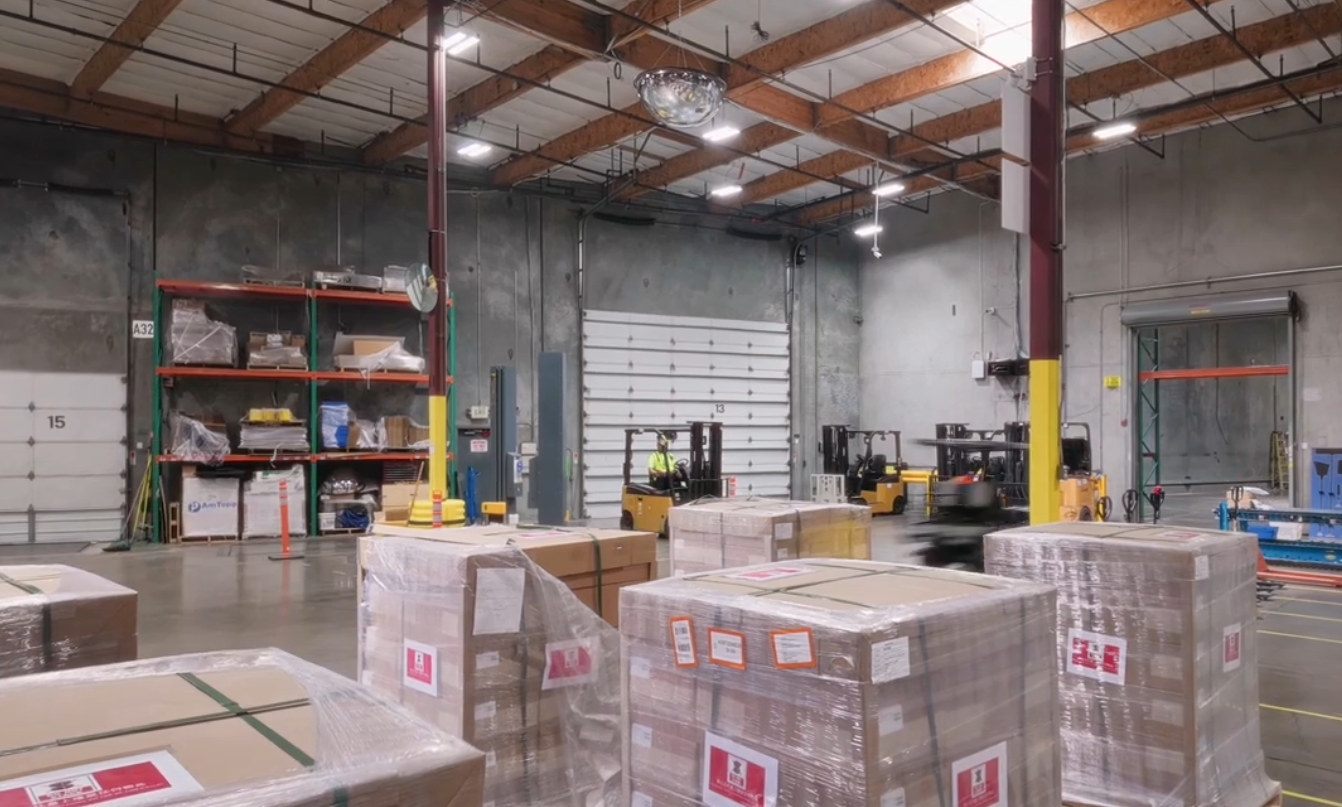
Manufacturing facilities are busy places. Employees are coming in for different shifts, trucks are pulling up to loading docks, vendors and contractors need access, and valuable equipment and materials are spread across a large property.
That creates a lot of moving parts to keep track of.
Most facilities already have some kind of security in place. There are cameras on the building, badges on the doors, maybe an alarm system after hours. But having security equipment and having full visibility across a facility aren't always the same thing.
For the first week of our Protect the Production Floor series, we're looking at a few of the places where security gaps tend to show up.
Who Can Get Where?
Think about how many different people may enter a manufacturing facility during a normal week. Employees, delivery drivers, vendors, maintenance crews, temporary workers and visitors may all need access at some point.
The problem is that they don't all need access to the same places.
Production areas, inventory rooms, IT spaces and equipment rooms may need tighter restrictions than a lobby or employee entrance. Traditional keys can make that difficult, especially when employees leave, roles change or a key simply goes missing.
This section can talk about access control in a practical way. Not just keeping people out, but knowing who entered a certain area and when.
A Camera Doesn't Help Much if It's Pointed at the Wrong Place
Manufacturing floors can be difficult to cover.
Large equipment blocks sightlines. Shelving gets moved. Production layouts change. One camera that made perfect sense when it was installed five years ago may now be looking at the back of a machine.
It's worth looking at the facility from the perspective of what you actually need to see.
Can you clearly see employee entrances? What about the warehouse? The loading dock? Exterior doors? Parking areas?
The number of cameras matters less if the important areas still aren't covered.
Don't Forget About the Loading Dock
Loading docks deserve their own conversation because there is usually a lot happening there.
Products are going out. Deliveries are coming in. Drivers may be on the property for a short period of time. Employees are opening and closing exterior doors throughout the day.
If something goes missing or a delivery is disputed, being able to quickly see what happened matters.
This is a good place to introduce the value of connecting video with access activity rather than treating them as two completely separate systems.
What Happens After Everyone Goes Home?
Not every facility actually goes quiet at 5 p.m.
Second and third shifts, cleaning crews, maintenance teams, contractors and late deliveries can all create legitimate activity after normal business hours.
So an alarm at 10 p.m. doesn't automatically tell you something is wrong.
The useful part is having enough information to figure out what's happening without wasting time jumping between systems. Who accessed the building? Which door opened? Is there video from that area? Was that person supposed to be there?
That context can make a big difference.
Sometimes the Gap Isn't a Missing System
A facility might already have cameras, access control and intrusion detection.
The issue is that none of them talk to each other.
Imagine a restricted door is forced open. Someone gets an alert. Then they have to log into the camera system, figure out which camera covers that door, find the right time and search through the footage.
It works. It's just slow.
When those systems are connected, the door event can be tied to the corresponding video and alert. Now the person responding has more information from the start.
That's really the point of integrated security. It isn't about adding technology just to add technology. It's about making the systems you depend on more useful.
Security Gaps Usually Aren't Obvious Until Something Happens
This is what makes security gaps tricky.
A camera blind spot may not seem important until you need footage from that exact area. An old employee's badge may go unnoticed until it's used. A loading dock door that's routinely propped open can feel harmless until something disappears.
By then, you're trying to piece together what happened after the fact.
Taking the time to walk through a facility and look at these weak points before there's an incident can save a lot of headaches later.
Protecting the Production Floor
Manufacturing security doesn't stop at the front entrance.
It stretches from the parking lot and loading dock to the warehouse, production line and restricted areas inside the building.
The goal isn't to cover every square inch with another piece of technology. It's to know what's happening in the areas that matter and have the information you need when something doesn't look right.
That's a much better question for manufacturers to ask:
If something happened at our facility today, would we have enough information to know exactly what happened?
If the answer isn't an immediate yes, it may be time to take another look at the gaps.
Closing / CTA
K9 All Systems works with manufacturing facilities to take a closer look at their current security setup and find areas that may be getting overlooked.
Whether that's camera coverage, access control, intrusion detection, fire systems or bringing separate systems together, it starts with understanding what is already there and where the weak points are.
Protect the Production Floor. Know where your gaps are before they become a problem.
01
Faster Investigations
Modern security platforms help teams locate footage faster, identify vehicles and persons of interest, and gather evidence more efficiently.
Faster investigations
Improved evidence collection
Reduced response times
02
Streamlined Facility Access
Centralized access control helps organizations manage credentials, permissions, and facility access from a single platform.
Simplified administration
Better visibility
Improved accountability
03
Multi-Site Operations
Managing multiple locations becomes easier when security systems are unified into a single dashboard.
Unified visibility
Reduced complexity
Greater operational efficiency
04
Remote Monitoring
Remote facilities often lack on-site personnel. Remote monitoring improves awareness and response capabilities across distributed locations.
Increased visibility
Faster response
Enhanced coverage
Related Articles
.png)

Facility Snapshot
What does security look like at your location?
Claim your real-time area statistics and tailored security recommendations.
Get My Facility Snapshot >


.svg)
