
Every time AI-powered security makes the news, the same question seems to come up:
Has surveillance gone too far?
A recent case out of Suffolk, Virginia has brought that conversation back into the spotlight after a man accused of damaging multiple Flock Safety cameras claimed the technology violated constitutional privacy rights. The case is still working its way through the courts, but it raises a question that organizations across the country are already asking.
How do you use modern security technology without crossing the line?
It's a fair question—and one we think deserves a better conversation than the headlines usually provide.
AI Isn't Replacing Security. It's Making It Smarter.
When people hear "AI surveillance," it's easy to imagine cameras constantly watching every move someone makes.
In reality, most organizations aren't installing AI because they want to monitor people more closely. They're using it because they need better ways to protect their employees, customers, buildings, and assets.
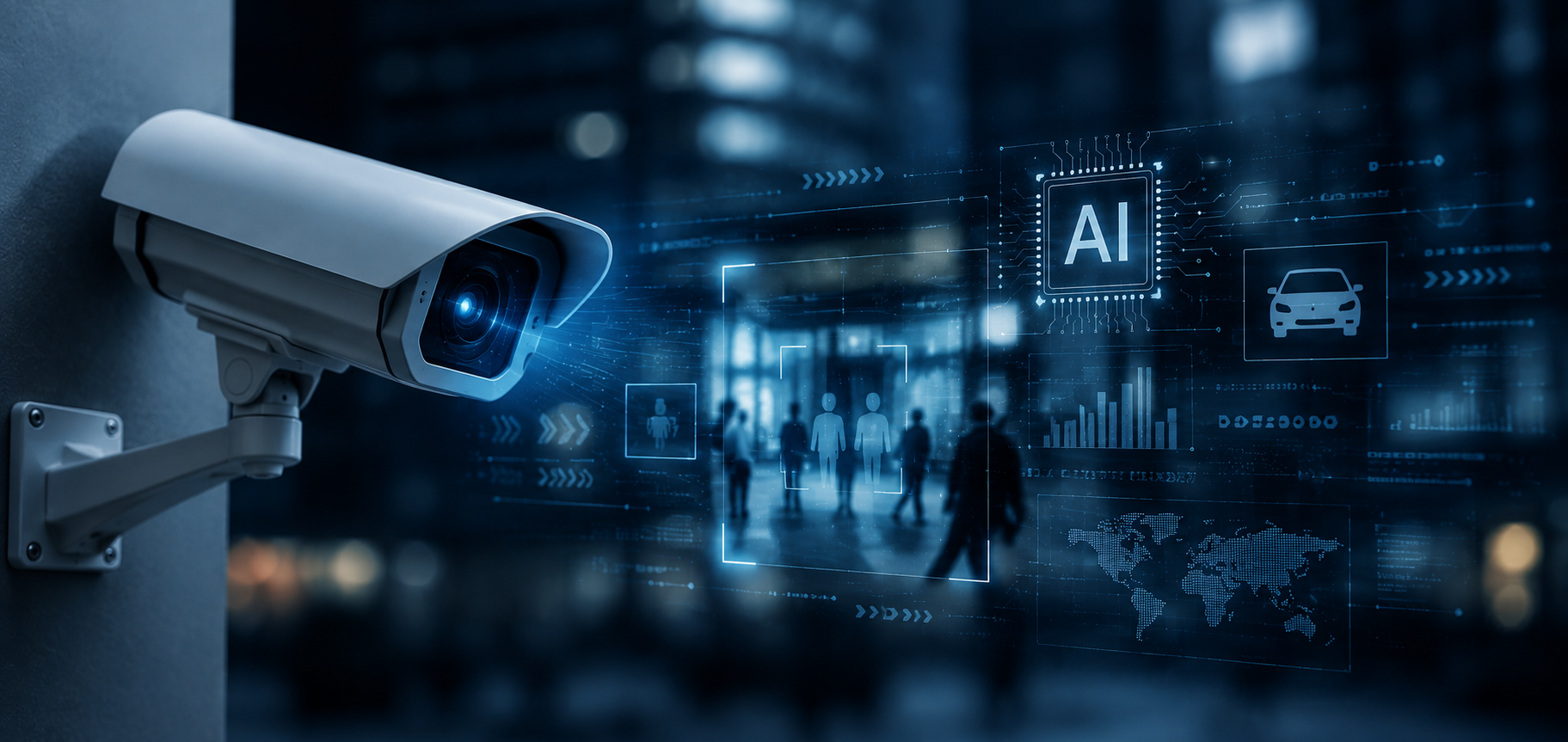
Today's intelligent security systems can quickly locate a vehicle involved in an incident, notify staff when someone enters a restricted area, or help investigators find the exact footage they need in minutes instead of hours.
It's not about collecting more video. It's about making the video you already have more useful.
Privacy Doesn't Have to Be the Tradeoff
Here's where we think the conversation often gets off track.
Security and privacy aren't opposites.
A well-designed security program should improve safety and protect people's privacy at the same time.
That starts with asking the right questions before the first camera is ever installed.
Who should have access to footage?
How long should recordings be stored?
What information actually needs to be collected?
How is that data protected?
These aren't technical questions—they're leadership questions.
Technology Is Only Part of the Solution
One of the biggest misconceptions we see is that buying better technology automatically creates better security.
It doesn't.
The best security systems are built around people, policies, and purpose.
The technology is simply the tool.
That's why every organization has different needs. A city managing public spaces isn't facing the same challenges as a manufacturing facility, a school district, or a healthcare provider. Their security strategies shouldn't look the same either.
The goal isn't to install more cameras.
The goal is to solve real security problems responsibly.
The Right Conversation to Have
Instead of asking whether AI belongs in physical security, a better question might be:
How do we use it responsibly?
When AI is implemented thoughtfully—with clear policies, limited access, proper oversight, and transparency—it becomes another tool that helps organizations respond faster, investigate incidents more efficiently, and better protect the people who depend on them.
At Knine All Systems, that's how we approach every project. We don't believe in one-size-fits-all security. We believe in designing solutions that fit each organization's goals, risks, and responsibilities.
Because the best security systems don't just make people safer.
They give people confidence that their safety—and their privacy—are both being taken seriously.
01
Faster Investigations
Modern security platforms help teams locate footage faster, identify vehicles and persons of interest, and gather evidence more efficiently.
Faster investigations
Improved evidence collection
Reduced response times
02
Streamlined Facility Access
Centralized access control helps organizations manage credentials, permissions, and facility access from a single platform.
Simplified administration
Better visibility
Improved accountability
03
Multi-Site Operations
Managing multiple locations becomes easier when security systems are unified into a single dashboard.
Unified visibility
Reduced complexity
Greater operational efficiency
04
Remote Monitoring
Remote facilities often lack on-site personnel. Remote monitoring improves awareness and response capabilities across distributed locations.
Increased visibility
Faster response
Enhanced coverage
Related Articles
.png)


Facility Snapshot
What does security look like at your location?
Claim your real-time area statistics and tailored security recommendations.
Get My Facility Snapshot >


.svg)
