
Walk through almost any commercial building and you'll probably notice a smoke detector on the ceiling, a pull station near an exit, or a fire alarm panel tucked away in an electrical room. They're easy to overlook because, when everything is working correctly, they're designed to stay in the background.
The problem is, a fire alarm system isn't something you want to think about for the first time during an emergency.
For business owners and facility managers, a commercial fire alarm system is one of the most important life safety investments in the building. It protects employees, customers, visitors, and property while helping ensure your organization can respond quickly when every second counts. Yet many systems don't receive much attention until an annual inspection uncovers deficiencies or an unexpected service call reveals a problem that has been developing for months—or even years.
That's why taking a proactive approach is so important.
A Reliable Fire Alarm System Is About More Than Compliance
It's easy to think of a fire alarm system as another box to check for code compliance, but its purpose goes far beyond passing an inspection.
A properly designed and maintained system provides early detection, alerts occupants to evacuate, and can initiate other building functions that help improve life safety during an emergency. Depending on the building, that may include elevator recall, HVAC shutdown, smoke control, or emergency notification systems. According to the National Fire Protection Association (NFPA), fire alarm systems are intended to provide reliable notification and support a coordinated emergency response when properly installed, inspected, tested, and maintained.¹
In other words, your fire alarm system isn't just protecting your building—it's protecting the people inside it.
The Warning Signs Are Usually There
One thing we've learned over the years is that fire alarm systems rarely fail without warning.
Most issues develop gradually. A device begins to age. A detector becomes dirty. Documentation gets misplaced after a renovation. Small maintenance items get pushed to next quarter because operations are busy. Individually, those things may not seem significant. Over time, however, they can affect how reliably the system performs.
Frequent false alarms are one of the clearest examples.
While they may seem like an inconvenience, false alarms interrupt business operations, pull employees away from their work, and consume emergency response resources. Even more concerning, repeated nuisance alarms can contribute to what's commonly called alarm fatigue—a phenomenon where building occupants become less likely to react quickly because they've experienced too many unnecessary evacuations.²
That's why recurring false alarms should never be viewed as "just part of the building." They're usually telling you something deserves attention.
Small Details Make a Big Difference
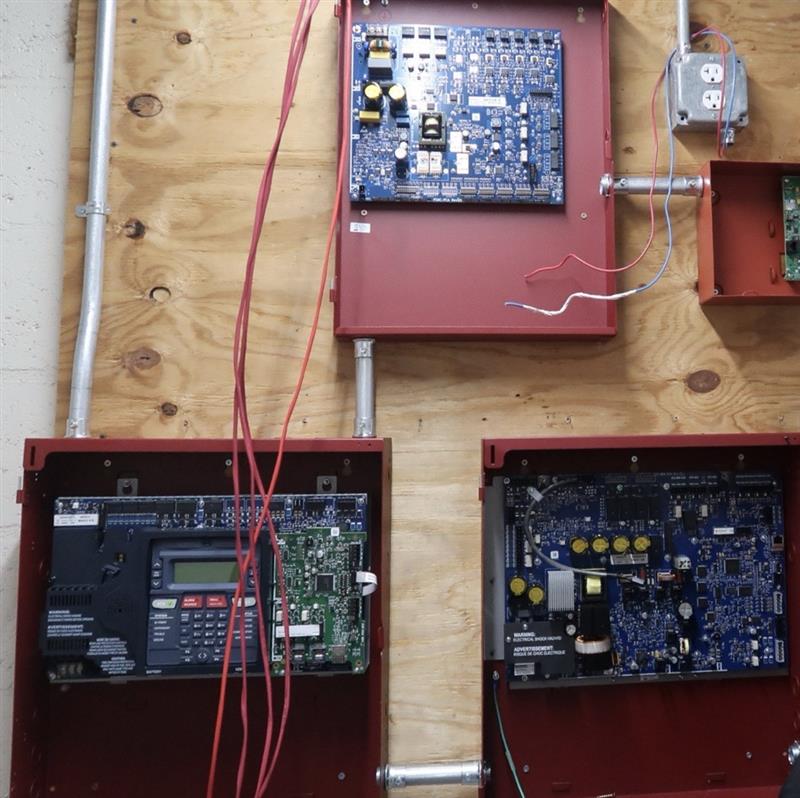
One of the things our technicians notice immediately when opening a fire alarm panel is whether the system was installed with long-term serviceability in mind.
A clean panel isn't about appearances.
Clearly labeled wiring, organized cable management, and proper documentation make inspections easier, reduce troubleshooting time, and simplify future maintenance. When technicians can quickly identify circuits and components, they spend less time searching for problems and more time solving them.
It's one of those details that often goes unnoticed until service is needed—but when that day comes, it can make a significant difference.
Fire Alarm Systems Don't Stand Alone
Commercial buildings have become much smarter over the last decade.
Today's facilities often rely on multiple technologies working together, including access control, video surveillance, intrusion detection, emergency communications, and fire alarm systems. When these systems are designed with the bigger picture in mind, organizations gain better visibility during emergencies and can respond more effectively.
That's why we encourage our customers to think beyond individual products.
Instead of asking, "Do I need a new fire alarm system?" we encourage a better question:
"Is my facility as prepared as it could be?"
Sometimes the answer is equipment. Other times it's maintenance, documentation, or improving how different systems work together.
Start With Understanding Your Facility
At Knine All Systems, we've always believed the best recommendations start with understanding the facility—not selling a product.
Every building is different. A healthcare facility has different life safety requirements than a warehouse. A school has different priorities than a municipal building. That's why there isn't a one-size-fits-all solution.
Sources
- National Fire Protection Association (NFPA). NFPA 72: National Fire Alarm and Signaling Code. https://www.nfpa.org/codes-and-standards/all-codes-and-standards/list-of-codes-and-standards/detail?code=72
- Electrical Contractor Magazine. Maintaining Fire Alarm Systems: Challenges and Their Solutions. https://www.ecmag.com/magazine/articles/article-detail/maintaining-fire-alarm-systems-challenges-and-their-solutions
- International Public Safety Data Institute. Study Finds Fire Alarm Certification Programs Can Reduce False Alarms, Boost Safety. https://i-psdi.org/articles/press/study-finds-fire-alarm-certification-programs-can-reduce-false-alarms-boost-safety/
01
Faster Investigations
Modern security platforms help teams locate footage faster, identify vehicles and persons of interest, and gather evidence more efficiently.
Faster investigations
Improved evidence collection
Reduced response times
02
Streamlined Facility Access
Centralized access control helps organizations manage credentials, permissions, and facility access from a single platform.
Simplified administration
Better visibility
Improved accountability
03
Multi-Site Operations
Managing multiple locations becomes easier when security systems are unified into a single dashboard.
Unified visibility
Reduced complexity
Greater operational efficiency
04
Remote Monitoring
Remote facilities often lack on-site personnel. Remote monitoring improves awareness and response capabilities across distributed locations.
Increased visibility
Faster response
Enhanced coverage
Related Articles
.png)

Facility Snapshot
What does security look like at your location?
Claim your real-time area statistics and tailored security recommendations.
Get My Facility Snapshot >


.svg)
